The Truth About the Ecotank Et 2850: Pros, Cons, and Verdict
Introduction
The Ecotank Et 2850 is part of the growing family of ink-tank printers designed to lower long-term printing costs by replacing traditional cartridges with refillable ink reservoirs. For buyers who print frequently—home offices, small businesses, students, and families—the promise of drastically reduced cost per page is appealing. But the decision to buy an ink-tank model involves more than comparing initial price tags: it requires understanding print quality, maintenance needs, reliability, and how the printer fits real-world workflows.
This article breaks down the Ecotank Et 2850 in an objective, practical way. It examines typical strengths and weaknesses, analyzes common user scenarios, compares the Et 2850 to reasonable alternatives, and provides a buying guide to help prospective purchasers decide whether this model fits their needs.
Product overview and design
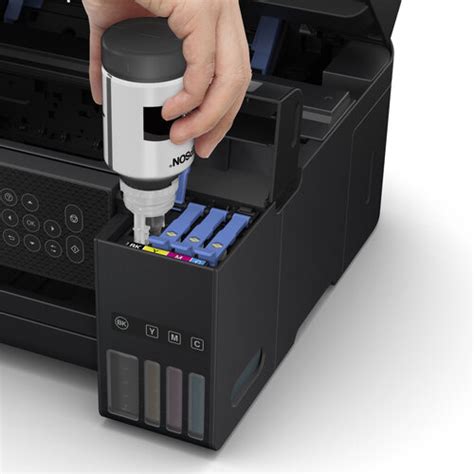
The Ecotank Et 2850 follows the familiar ink-tank form factor: a compact all-in-one unit with integrated refillable tanks for cyan, magenta, yellow, and black ink. The design intent is straightforward—sacrifice the convenience of prefilled cartridges for the economics of high-capacity bottles. For a household or small office where daily printing is common, this tradeoff can translate into substantial savings over a year or two.
Physically, the Et 2850 is designed to occupy a modest footprint on a desk or shelf. The ink tanks typically sit alongside the body or behind a transparent panel so users can visually monitor ink levels. Control surfaces are usually simple—buttons and a small display rather than a large touchscreen—keeping setup and operation approachable for non-technical users.
Key features and real-world performance
When evaluating a printer like the Ecotank Et 2850, buyers tend to care about the same core areas: print quality, print speed, operating cost, ease of use, connectivity, and maintenance. The following sections assess how the Et 2850 performs across those categories based on typical user experiences and the design philosophy of ink-tank models.
Print quality
For everyday documents—letters, reports, school assignments—the Et 2850 delivers clear, legible text and acceptable color graphics. Ink-tank printers use dye-based color inks that produce vibrant colors on plain paper, making them good for color flyers, charts, and casual photos. However, buyers who require professional-grade photo reproductions or highly color-accurate proofs should temper expectations: dedicated photo printers with pigment-based inks and more color channels will beat an ink-tank all-in-one for fine gradations and archival longevity.
Print speed and throughput
Speed for the Et 2850 is adequate for small offices and home use. Typical job turnaround—multiple pages of text—feels responsive in daily use, but it is not a high-volume production solution. For businesses printing hundreds of pages daily, a laser printer or a higher-end commercial inkjet will provide faster throughput and larger input/output trays.
Operating cost
This is where the Ecotank family shines. Refillable ink bottles hold far more ink than cartridges and are less expensive on a per-milliliter basis. The result is a low cost per page that becomes compelling for anyone printing dozens or hundreds of pages per month. Users who track total cost of ownership (TCO) will typically see payback on any premium paid at purchase within months, depending on volume.
That said, buyers should compare the price and yield of replacement ink bottles in their region—savings depend on local ink pricing and availability. Third-party bottles may be cheaper but can void warranties or affect printhead longevity.
Connectivity and mobile printing
The Et 2850 usually supports modern connectivity options: Wi-Fi for networked printing, Wi-Fi Direct for direct mobile-to-printer jobs, and USB for wired connections. Mobile printing from smartphones and tablets via vendor apps or standard protocols (AirPrint, Mopria) makes the printer convenient for mixed-device households. Setup is typically straightforward, but users with complex networks or strict security policies may need to consult documentation or IT support for proper configuration.
Find top-rated Electronics products at great prices.
Browse Now →Maintenance, reliability, and longevity
Ink-tank printers reduce the frequency of "ink out" interruptions, but they still require routine maintenance. Keeping printheads clean, running occasional nozzle checks and printhead alignment, and using the printer regularly all help prevent clogs. The Et 2850 is suitable for users who print somewhat regularly—if the device sits unused for months, dried ink and clogs become more likely.
Build quality for this printer class is generally aimed at consumer and small-office durability. It can serve reliably for several years with normal use, but it is not built for heavy industrial duty.
Real-world use cases: who benefits most?
- Home office and freelancers: Users who print invoices, contracts, and occasional color brochures will appreciate the low running cost and multifunction features.
- Students and families: Low per-page costs and simple connectivity make the Et 2850 a practical choice for school reports, photos, and household paperwork.
- Small businesses with moderate output: Shops that print invoices, labels, and occasional client materials benefit from bulk ink capacity without the expense of a larger commercial printer.
- Casual photo enthusiasts: For snapshots and family photos, the Et 2850 is adequate, but enthusiasts who demand museum-quality prints should consider a dedicated photo printer.
Pros & Cons
Pros
- Low long-term cost per page thanks to high-capacity refillable ink tanks
- Convenient all-in-one functionality: print, copy, scan in a single compact unit
- Good color vibrancy for everyday color documents and casual photos
- Simple, user-friendly refill process compared with cartridge swapping
- Wireless and mobile printing support for multi-device households and small offices
- Visible ink levels make it easy to plan refills and avoid surprise outages
Cons
- Higher upfront cost than entry-level cartridge printers
- Not the best choice for professional photo printing or color-critical work
- Printhead maintenance still required; long idle periods can cause clogs
- Paper capacity and speed are modest compared with office laser machines
- Replacement ink bottle availability and pricing can vary by region
Comparison: Ecotank Et 2850 vs alternatives
To determine whether the Et 2850 is the right purchase, it helps to compare it across common decision criteria with a few reasonable alternatives: an entry-level cartridge-based inkjet and a typical small-office monochrome laser printer. The table below highlights functional differences rather than precise numeric specs, which vary by configuration and firmware.
| Criteria | Ecotank Et 2850 | Entry-level Cartridge Inkjet | Small-office Monochrome Laser |
|---|---|---|---|
| Ink system | Refillable high-capacity tanks (color + black) | Disposable ink cartridges (smaller capacity) | Toner cartridges (toner powder) |
| Running cost | Low cost per page over time | Higher cost per page | Low cost per page for black-and-white |
| Initial price | Moderate-to-high for consumer printers | Low | Moderate to high |
| Print quality (color) | Good for documents and casual photos | Good for documents, variable for photos | Poor for color (usually none) |
| Speed | Moderate | Moderate to slow | Fast (especially for text) |
| Maintenance | Requires periodic head cleaning; less frequent refills | Frequent cartridge changes; similar head care | Minimal printhead maintenance |
| Best for | High-volume color printing at low running cost | Low-volume occasional printing | High-volume monochrome document printing |
Buying guide: what to check before purchase
Buyers should assess their printing habits and priorities to decide whether the Ecotank Et 2850 makes sense. The following checklist condenses the most relevant considerations into actionable questions.
1. Monthly print volume
Estimate typical monthly pages. If monthly output is low (a few dozen pages), the savings from an ink-tank system will accrue slowly, and a cheaper cartridge printer could be more economical up front. If monthly output is moderate to high (hundreds of pages), ink-tank systems usually deliver better TCO.
2. Document types and quality requirements
Decide whether printing is mostly text and simple graphics or whether high-quality photos and color-accurate materials are needed. The Et 2850 is strong for text and general color printing but not a replacement for a pro-level photo printer.
3. Space, placement, and paper handling
Check the printer's footprint and paper tray capacities. Users who frequently run large print jobs should prefer models with larger input trays or consider a dedicated office machine.
4. Connectivity and ecosystem
Ensure the printer supports the network configurations and mobile protocols in use at home or the office. Confirm compatibility with primary devices and operating systems. If users rely on scanning to cloud services or direct-to-email workflows, test whether the Et 2850’s software supports that natively or via third-party apps.
5. Replacement ink availability and price
Search for genuine replacement ink bottles for the Et 2850 and compare per-bottle yield and cost. Check local retailers or the manufacturer’s store for availability. Factor these costs into long-term ownership calculations.
Find top-rated Electronics products at great prices.
View Offers →6. Warranty, support, and serviceability
Review warranty terms—length, what’s covered (printhead, hardware), and how warranty claims are handled. Local service centers or mail-in support offer convenience for users who depend on continuous operation.
7. Usage patterns and maintenance willingness
Buyers who use the printer regularly and are comfortable performing simple maintenance (nozzle checks, occasional head cleanings) will have a better experience. Those who print rarely should consider whether infrequent use will increase the risk of clogs or require occasional professional servicing.
Practical tips for getting the most from an Et 2850
- Run a small test print once or twice a week to keep inks flowing and prevent clogs.
- Use the manufacturer-recommended ink bottles for initial ownership to preserve warranty and performance; assess third-party options carefully.
- Keep a spare set of ink bottles on hand if printing is critical—refilling is straightforward but interruptions can be disruptive.
- Store the printer in an environment that avoids extreme temperatures and humidity to prolong ink life.
- Use appropriate paper types for specific jobs—plain paper for documents, photo paper for images—to get the best results.
Common buyer questions
Is the Et 2850 right for a small business?
For small businesses that print a mix of documents and occasional color materials, the Et 2850 can be cost-effective. It reduces recurring costs and handles typical office work. If daily throughput reaches several hundred pages, a laser solution might be more robust.
How often will ink bottles need replacing?
Frequency depends on how much printing is done; many users report months between refills under moderate use. Buyers should calculate expected yield by checking the yield information for the ink bottles and matching it against estimated monthly pages.
Does using third-party ink void the warranty?
Policies vary by manufacturer and region. Many manufacturers recommend using genuine ink to ensure optimal performance and to maintain warranty coverage. Using third-party inks may work and save money but can carry risk of printhead damage and warranty denial.
Conclusion
The Ecotank Et 2850 is a compelling option for people and small organizations seeking lower long-term printing costs without sacrificing the convenience of an all-in-one device. Its refillable ink tanks and straightforward connectivity make it a practical choice for home offices, families, and small businesses that print regularly. The tradeoffs are clear: a higher initial purchase price, some routine maintenance, and limits on professional photo output and ultra-high-volume throughput.
Ultimately, the Et 2850 delivers the most value to buyers who prioritize low operating costs and moderate color printing needs. Prospective purchasers should weigh estimated monthly volume, desired print quality, and maintenance willingness. With the right match between model and use case, the Ecotank Et 2850 can reduce printing expenses significantly while offering reliable, everyday performance.