The Real Truth: Macos Tahoe or Bosgame Gvp7600 Egpu Docking Station?
Many laptop buyers and owners face a familiar crossroads: invest in a software-driven upgrade that promises better efficiency and new features, or invest in hardware that delivers a tangible bump in graphics and port expandability. In this article, the focus is on two very different but commonly considered options for improving laptop workflows: macOS Tahoe — Apple’s latest operating system evolution as it applies to laptop users — and the Bosgame GVP7600 eGPU Docking Station, a third‑party external GPU and docking solution. This piece examines practical use cases, buyer priorities, compatibility realities, and the trade-offs between upgrading the software platform versus adding external hardware acceleration and connectivity.
Introduction: Two Paths to Better Laptop Performance
At a high level, choosing between a major OS refresh and an eGPU dock represents two different philosophies. One is software-centric: the operating system changes how the laptop uses resources, protects privacy, and manages workflows. The other is hardware-centric: add external compute and connectivity to overcome the laptop’s internal limitations. Buyers typically care about measurable outcomes—does an upgrade produce faster video exports, smoother gaming, longer battery life, or a more seamless multi-monitor setup?
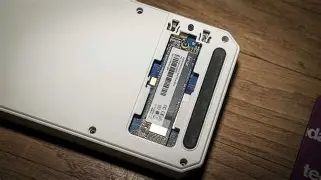
This article approaches the question practically. It evaluates what each option actually brings to the table for realistic laptop users such as content creators, developers, gamers, and business professionals. It does not attempt to be marketing copy. Instead, it highlights real-world trade-offs so a buyer can choose the right path based on needs, budget, and platform constraints.
Product Analysis: macOS Tahoe
Overview. macOS Tahoe represents the next step in Apple’s operating system evolution for Mac laptops. For most users the operating system matters because it determines application compatibility, system-level performance characteristics, battery and thermal behavior, and the overall user experience. Major macOS updates typically add efficiency improvements, security features, and user-facing functionality that can meaningfully affect daily use.
Who benefits from a macOS Tahoe upgrade?
- Users who prioritize power efficiency and battery life improvements.
- Professionals who rely on system-level features like window management, continuity, and native app optimizations.
- Anyone concerned with security and privacy enhancements delivered by the OS.
Real-world use cases. In practice, macOS updates often improve background scheduling, reduce thermal throttling in low-power scenarios, and optimize how apps use the GPU for UI rendering rather than compute. For a photographer or writer who uses a laptop on the go, macOS Tahoe’s refinements could result in smoother app switching, longer unplugged time, and fewer interruptions from background tasks. For software developers, updated tools, new frameworks, and debugging utilities in the OS can streamline builds and testing.
Compatibility and limitations. Upgrading to a new macOS is rarely friction-free. The primary concerns for buyers are application compatibility and hardware support. Some older apps may require updates or become deprecated. Additionally, Apple’s modern platform directions—especially around Apple Silicon—mean that certain third-party hardware (notably some eGPU solutions) may have limited or no support. Anyone considering macOS Tahoe should verify that mission‑critical apps and peripherals are supported and that firmware updates for external devices are available from vendors.
Find top-rated Laptops & Computers products at great prices.
Browse Now →Deployment considerations. The upgrade process itself is straightforward for most users, but planning helps: backup data, check vendor support for specialized software (audio plugins, GPU-accelerated renderers), and allow time for the first boot and app updates. For managed enterprise laptops, IT teams should pilot the OS before broad deployment to catch edge cases.
Product Analysis: Bosgame GVP7600 eGPU Docking Station
Overview. The Bosgame GVP7600 eGPU Docking Station is positioned as a multi-function external GPU solution that combines the benefits of an external graphics card enclosure with a docking station’s port expansion. For laptop users who hit the ceiling on internal GPU performance—particularly those with lightweight ultrabooks or thin-and-light notebooks—an eGPU offers a way to add desktop‑class GPU power without swapping the laptop.
Who benefits from the Bosgame GVP7600?
- Content creators requiring faster GPU-accelerated rendering and real-time previews.
- Gamers who want desktop-level performance on a portable laptop.
- Professionals needing many high-resolution external monitors and abundant I/O ports.
Real-world use cases. A video editor working on 4K timelines can offload GPU encodes and effects to an external GPU, dramatically shortening export times on laptops that otherwise rely on integrated GPUs. Similarly, a software developer testing GPU workloads or a data scientist running local model inference can use an eGPU for much faster workflows. For gaming, pairing a compact laptop with an eGPU at home provides the best of portability and performance.
Compatibility and limitations. External GPU solutions depend heavily on the laptop’s interface—typically Thunderbolt 3 or 4—and the OS’s support for external graphics. Historically, macOS support for eGPUs has been stronger on Intel-based Macs and more restricted on Apple Silicon machines. Windows laptops generally offer broader eGPU compatibility but still require correct drivers and BIOS/firmware settings. Buyers must also ensure the Bosgame enclosure supports the physical GPU they intend to install and that power delivery and cooling meet their needs.
Deployment considerations. Setting up an eGPU dock involves more than plugging in a cable. Tasks include physically installing the GPU (if the enclosure is barebones), installing drivers, possibly toggling BIOS settings, and configuring displays. Noise and thermal management are practical concerns in small workspaces. Additionally, portability is limited—an eGPU dock is far less travel-friendly than an OS upgrade and is best seen as a semi-stationary upgrade for a home or office setup.
Looking for the best Laptops & Computers deals on Amazon?
Browse Now →Pros & Cons
macOS Tahoe
- Pros:
- Native system optimizations that can improve battery life and responsiveness.
- Improved security and privacy features at the OS level.
- Seamless integration with Apple ecosystem features for continuity and backups.
- No additional physical hardware required; zero added carry burden.
- Cons:
- Potential application compatibility issues that require vendor updates.
- Limited effect on GPU-bound tasks if the laptop’s hardware is the bottleneck.
- Apple’s platform directions may limit support for certain third-party hardware.
Bosgame GVP7600 eGPU Docking Station
- Pros:
- Provides a substantial and measurable GPU performance uplift for GPU-heavy workloads.
- Expands ports and monitor support—practical for desktop-like workstation setups.
- Offers flexibility to upgrade the GPU inside the enclosure over time (if supported).
- Cons:
- Compatibility depends on the laptop’s Thunderbolt implementation and OS drivers.
- Setup can be more complex and requires physical space, power, and cooling consideration.
- Less portable and adds cost on top of the GPU itself.
Comparison Table
| Feature | macOS Tahoe | Bosgame GVP7600 eGPU Docking Station |
|---|---|---|
| Primary purpose | System-level improvements, security, and workflow optimizations | External GPU compute and port expansion |
| Ideal for | All laptop users seeking better efficiency and updated features | Power users needing desktop GPU performance or many I/O options |
| Performance impact | Often improves responsiveness and power management; limited GPU gains | Significant GPU performance uplift for compatible workflows |
| Portability | No change; purely software | Low portability; best for stationary use |
| Compatibility | Depends on app vendors and hardware support; generally broad for native apps | Depends on Thunderbolt version and OS driver support; check GPU and OS compatibility |
| Installation complexity | Low to moderate (backup and app checks recommended) | Moderate to high (hardware installation, drivers, configuration) |
| Cost considerations | Free upgrade but potential hidden costs if hardware or apps need updating | High—includes enclosure cost plus GPU and potentially a higher power bill |
| Long-term flexibility | Long-term ecosystem improvements; tied to vendor OS cadence | High if enclosure allows GPU upgrades; can follow GPU improvements over time |
| Best real-world payoff | General productivity, battery life, security, and app experience | Rendering, high‑fps gaming, multi-monitor professional setups, GPU compute tasks |
Buying Guide: Which Path to Choose?
To select the right option, the buyer should first define the primary problem they want to solve. Below is a structured checklist and guidance tailored to common buyer profiles.
Step 1 — Define the core need
- If the goal is better battery life, smoother UI, or improved privacy/security across everyday tasks, a system upgrade (macOS Tahoe) is the logical first step.
- If the goal is to dramatically speed up GPU-bound tasks like 3D rendering, video export, or demanding gaming, an eGPU docking station like the Bosgame GVP7600 is the more direct solution.
Step 2 — Verify compatibility
- For macOS Tahoe: Check critical app vendors for compatibility statements. Confirm that any essential drivers (audio interfaces, graphics plugins, enterprise management tools) are supported.
- For Bosgame GVP7600: Verify the laptop has Thunderbolt 3 or 4 with full external GPU support. On macOS, check whether the specific OS version and laptop generation officially support eGPUs. On Windows, confirm driver availability for the GPU model intended.
Step 3 — Consider budget and total cost
- An OS upgrade is typically free, but it can expose a need for app upgrades or even new hardware if the laptop is very old. Budget for contingencies like software upgrades.
- An eGPU solution includes the enclosure cost, the GPU cost, and potentially extra power costs and peripherals (monitors, cables). Factor in the cost of a higher-wattage PSU or a better cooling solution if required.
Step 4 — Think about portability and workflow
- For frequent travelers and people who work primarily on battery while mobile, prioritize software and internal improvements.
- For hybrid workflows—portable on the go, powerful at a desk—consider combining both: keep the laptop’s OS current for efficiency and add an eGPU dock at a fixed workspace for horsepower when needed.
Step 5 — Evaluate support and warranties
- Check warranty and return policies on hardware like the Bosgame dock. Confirm vendor support channels and firmware update frequency.
- For the OS, check enterprise management guidance and rollback strategies in case of incompatibilities after upgrade.
Scenarios and recommendations
- Student or general user: Upgrade to the latest macOS to benefit from improved battery life, security, and built-in app features before exploring hardware add-ons.
- Content creator on a budget: If the laptop’s GPU is the main bottleneck and the user works mainly at home, invest in the eGPU dock. It will reduce render times and enable more complex timelines.
- Pro workstation user: For maximum flexibility, a combination is ideal: keep the OS current for workflow improvements and add an eGPU where heavy GPU compute is routine.
- Gamer who also travels: Evaluate whether the travel laptop supports the eGPU and whether the dock’s cost justifies the gaming uplift. If the laptop is Apple Silicon, double-check eGPU support before committing.
Final Considerations Before Deciding
Two practical tips summarize how to approach the decision. First, always test before you commit where possible: pilot macOS Tahoe on a secondary device or in a controlled environment, and if feasible try an eGPU setup temporarily to confirm gains. Second, measure the bottleneck: if applications show low CPU usage but 100% GPU usage during tasks, the GPU is the culprit and an eGPU is the direct fix. If the device is thermal-throttling or background tasks dominate battery life, the OS and system settings will likely have a larger effect.
Conclusion
There is no one-size-fits-all answer. macOS Tahoe offers broad improvements that benefit almost every laptop user by refining power management, security, and workflow integration. It is the prudent first step for those seeking better day-to-day laptop behavior and minimal added hardware complexity. The Bosgame GVP7600 eGPU Docking Station, by contrast, is a targeted investment that delivers a substantial and measurable uplift in GPU performance and I/O capability for users who have specific, GPU-heavy needs.
In short: if the primary need is overall system refinement and portability, prioritize the OS update; if the need is clear GPU horsepower and workstation-style expandability, the eGPU dock is the better choice. For many power users, the optimal solution is to combine both—use macOS Tahoe to keep the base system efficient and add an eGPU at a fixed workstation to tackle heavy rendering, gaming, or compute tasks. By defining priorities, verifying compatibility, and testing where possible, buyers can choose the path that delivers the best real-world payoff for their particular workflows.