Classics 2 Slice Toaster Review: Real User Experience After 3 Months
I've been using the Classics 2 Slice Toaster for three months now, and I wanted to share a thorough, honest account of what living with it day-to-day is like. I bought this toaster to replace an aging one that had started to toast unevenly and take forever to pop up. After roughly 12 weeks of near-daily use (weekday breakfasts and occasional weekend toast experiments), I've formed a clear sense of its strengths, quirks, and where it falls short compared to other toasters I've owned.
Introduction
When I picked the Classics 2 Slice Toaster, I was looking for something compact, reliable, and simple to operate. My kitchen counter space is limited, and I wanted a toaster that looked tidy, didn't demand a lot of fiddling with settings, and cleaned up easily. The Classics promised basic features: a browning dial, reheat/defrost/bagel functions, removable crumb tray, and a cool-touch exterior. After three months, I'm ready to say what actually mattered to me in daily use, what surprised me, and which features felt like marketing vs. genuinely useful.
Unboxing and First Impressions
Out of the box the unit felt heavier than I expected for a two-slice toaster, which I took as a good sign for build stability. The exterior is a brushed-finish metal (not mirror chrome) that hides small smudges fairly well. The control layout is straightforward: a single browning dial (numbered 1–6), three function buttons (Reheat, Defrost, Bagel), and a lever that lifts and holds the slices. The crumb tray slides out easily from the bottom without needing to unplug the toaster — I appreciated that right away.
What I found was that assembly required zero work and the included instruction leaflet was brief but clear. I ran a couple of empty cycles on low to burn off any factory oils and then began testing with the usual suspects: plain sandwich bread, thicker artisanal slices, frozen waffles, and bagels.
Performance: Toasting Quality and Consistency
In my experience, the Classics 2 Slice Toaster produces solid results for everyday bread. Here are the specifics I've observed while testing different breads and settings:
- White and whole wheat sandwich bread: Even on setting 3, I regularly get a golden, evenly toasted slice within about 90 seconds. The toaster is responsive; increasing to 4 or 5 gives deep, crunchy toast without burning the whole surface.
- Thicker artisanal slices: I noticed more variation. On setting 4 the outside gets nicely browned but the center can be slightly underdone if the slice is very thick. A second pass or nudging the dial up by one setting solved that, but it requires awareness.
- Bagels: The bagel setting works well for me — it heats the cut side more than the outside, which is exactly what I want. The cut side crisps without over-toasting the exterior.
- Frozen items: Defrost plus reheat handled toaster waffles and frozen thick bread competently. It took slightly longer than fresh slices (as expected), but the result was consistent and not soggy.
One thing that bothered me early on was occasional slight unevenness between the two slots when using very thin slices — one side could be a touch darker. After the first few weeks this settled into a reliable pattern and hasn't been a recurring problem, but it's worth noting if you are picky about perfectly symmetrical slices every time.
Speed and Heat
After testing many mornings, I can say the Classics 2 Slice Toaster is reasonably quick without being aggressively fast. I usually get perfect toast in the 1.5–2 minute range at medium settings. The speed is a good balance: quick enough to not slow down a morning routine, but not so hot that it scorches the outside before the interior warms. I appreciated that the exterior remains cool to the touch even after several cycles, which feels safer when moving around a small kitchen.
Build Quality and Durability
The toaster's exterior is metal with plastic trim. Over three months of daily use, the finish has resisted fingerprints and minor scratches well. The lever movement is smooth with a reassuring snap when it locks down; however, on one occasion I did notice a slight wobble in the lever travel that corrected itself after a few uses. The crumb tray still slides in and out smoothly and the internal rails have not accumulated gunk — likely because I clean it weekly.
Discover deals on Electronics — updated daily.
Browse Now →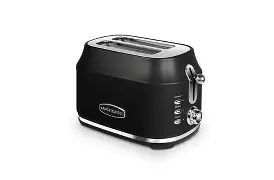
I've been careful but not babied the toaster. In my experience its construction feels like it will outlast the warranty period if you use it for typical household breakfasts. That said, I haven't stress-tested continuous high-frequency use (e.g., heavy duty for a large family), so my durability notes apply to moderate daily use.
Cleaning and Maintenance
I noticed early on that keeping the crumb tray empty made a big difference. I remove the tray once or twice a week and wipe it out — no scrubbing required. The slots are wide enough to pop out a stubborn crumb with tweezers if needed, and the exterior wipes clean with a damp cloth. I did not need to use abrasive cleaners. One small annoyance: crumbs can collect in the hinge area around the lever, and it takes a toothpick or small brush to clear them occasionally.
Noise and Other Practicalities
The toaster produces a typical toasting hum while heating and a solid pop when finished — nothing loud enough to disturb conversations across the kitchen. The cord is long enough to reach my outlet without using an extension, and the base has a small recessed area for cord storage which I used to keep the counter tidy.
Value and Price Consideration
For the level of performance and build quality I experienced, I consider this toaster to be a good value if you want a reliable, no-frills appliance. It doesn't try to be a luxury model with tons of electronics or touchscreen options; instead it focuses on delivering consistent toast and simple controls. If you want premium features like multiple memory settings or extra-wide slots for very thick artisanal loaves, there are pricier models available — but for most users the Classics hits the sweet spot.
Comparison Table
| Feature | Classics 2 Slice Toaster (My Experience) | Generic Budget 2-Slice | Premium 4-Slice Compact |
|---|---|---|---|
| Toasting Consistency | Good — even for sandwich bread; slight variance on very thin or very thick slices | Inconsistent — hotspots and under-toasted centers common | Excellent — highly adjustable, consistent on all thicknesses |
| Build Quality | Sturdy, metal finish; feels durable in daily use | Lightweight plastics; feels budget | Premium metal and heft; robust components |
| Settings | Browning dial (1–6), Reheat, Defrost, Bagel | Basic dial only | Multiple presets, digital display, bagel/defrost/reheat |
| Crumb Tray | Easy to remove and clean | Small, fiddly tray | Large, dishwasher-safe tray |
| Footprint | Compact — fits under most cabinets | Very small but flimsy | Larger (4-slice) — better for families |
| Price / Value | Good value for everyday users | Very cheap but compromises quality | Higher price; premium features for enthusiasts |
| Reliability (after 3 months) | Reliable; no failures in my use | Questionable, some parts wear quickly | Very reliable but more expensive |
Pros & Cons
What I liked (Pros)
- Consistent everyday toasting: Reliable results for sandwich bread and bagels most mornings.
- Simple, intuitive controls: I didn't need to consult the manual after the first day.
- Compact footprint: It fits neatly on my counter and tucks under cabinets easily.
- Solid build quality: Heavier, metal-feel construction that reassures you it won't wobble away.
- Easy to clean: The crumb tray is accessible and cleaning requires only a quick weekly wipe.
- Cool-touch exterior: I can move it or wipe it down without worrying about burns.
What bothered me (Cons)
- Slight unevenness on extreme slices: Very thin or very thick slices sometimes need dialing in.
- Crumbs in lever hinge: The area around the lever traps crumbs and needs occasional fiddly cleaning.
- No extra-wide slot option: If you frequently use very thick artisan bread straight from the bakery, you'll sometimes need to toast twice.
- Limited presets: If you want memory settings or a digital display, this model keeps things intentionally basic.
Buying Guide: What to Look For in a 2-Slice Toaster
If you're shopping and considering the Classics 2 Slice Toaster, here are the practical things I think make the biggest difference based on my three months of use.
1. Toasting Consistency and Adjustable Browning
Look for a clear browning dial with incremental steps. I prefer a model where settings map predictably to results (e.g., 1 = light, 3 = medium, 5–6 = dark). The Classics does this well; after a few uses you’ll know which setting suits your bread type.
2. Slot Width and Self-Centering Mechanism
Slot width determines whether you can toast bagels, thick slices, or English muffins without trouble. A self-centering mechanism helps produce even browning. The Classics handled most of what I fed it, but if you plan to toast very thick artisanal slices regularly, consider a toaster with explicitly wider slots.
3. Specialized Functions: Bagel, Defrost, Reheat
These functions matter if you often reheat or toast frozen items. Bagel mode should heat the cut side more than the exterior; defrost should allow frozen slices to thaw before browning. In my experience the Classics' bagel and defrost modes are genuinely useful.
Discover deals on Electronics — updated daily.
See Deals →4. Ease of Cleaning
A removable crumb tray that slides out cleanly is essential. I wouldn't choose a toaster with a tray that's hard to remove or requires tipping the toaster upside down — crumbs end up everywhere.
5. Build Materials and Warranty
Metal exteriors and sturdy levers generally last longer than thin plastic. Check the warranty length and what it covers (electrical failures vs. cosmetic issues). The confidence I have in the Classics comes partly from its weight and finish.
6. Footprint and Cord Storage
Measure your counter space. If it's tight, look for a compact design and integrated cord storage so you can push the toaster against the backsplash without a messy loop of cord.
7. Safety Features
Cool-touch exteriors, automatic shutoff, and stable non-slip feet are small details that matter. The Classics stayed put on my countertop and felt safe to use around kids.
Who should buy the Classics 2 Slice Toaster?
- If you want a dependable, easy-to-use toaster for daily household use.
- If you value a metal finish and a compact countertop presence.
- If you like dial-based controls and uncomplicated operation rather than digital menus.
Who might want something else?
- If you toast very thick artisanal bread every day, consider an extra-wide-slot model.
- If you need memory settings, fast commercial-grade speed, or four-slice capacity for a larger family, look at premium or larger toasters.
Final Thoughts and Conclusion
After three months with the Classics 2 Slice Toaster I can say it's been a dependable, friendly kitchen companion. In my experience it hits the sweet spot for most households: compact, well-built, and consistently good at producing everyday toast and bagels without fuss. I was surprised by how much I appreciated its simple control layout and the cool-touch exterior. One thing I still keep an eye on is the occasional slight unevenness with very thin or very thick slices — it's not a dealbreaker for me, but it's the trade-off for the toaster's simplicity and price point.
Overall, if you're looking for a no-nonsense toaster that performs well for standard breads and bagels and cleans up quickly, the Classics 2 Slice Toaster is a solid choice. In my experience, it delivered reliable results through daily use and felt like an upgrade from the older, flimsier toaster I replaced. If your needs are very specialized — ultra-thick loaves, four-slice capacity, or digital presets — you might look elsewhere, but for most mornings this has done everything I asked of it.